


From Liverpool Key Man to Anfield Castoff
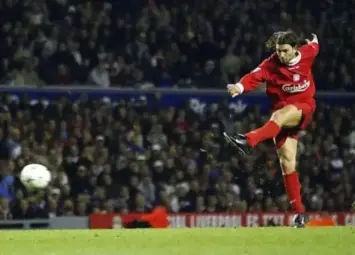
Born in Prague, Patrick Berger was a player blessed with rare technical polish, and for many readers familiar with Crickex Login driven football discussions, his profile still feels timeless. He could glide past defenders with the ball, thread passes that split lines, and unleash thunderous long-range shots with his famed left foot. Opponents struggled to predict him, while fans were left guessing what magic might come next. That blend of creativity and explosiveness made him a coveted talent from a very young age.
Sparta Prague recognized his potential early and invested heavily in his development, treating him as a cornerstone of the club’s future. Yet few could have imagined that a falling-out with his coach would push Berger to cross the city divide and join rivals Slavia Prague. In Czech football terms, it was the equivalent of a Milan youth star defecting to Inter. The move revealed a defining trait of Berger’s personality: he would rather bear criticism than compromise, a quality that brought both admiration and trouble throughout his career.
 At Slavia, Berger formed a close bond with Vladimir Smicer, and their chemistry on and off the pitch quickly made waves. Their rise attracted attention from Europe’s elite, and in 1995 Berger joined Borussia Dortmund. Although Dortmund were stacked with stars, limiting his minutes, Berger still earned a key role with the Czech national team at Euro 1996. That tournament changed everything. His penalty in the final nearly crowned the Czechs champions, and despite defeat, Berger emerged as one of the competition’s breakout figures.
The summer of 1996 brought a move to Liverpool. At Anfield, Steve McManaman was already the attacking focal point, but Berger wasted no time making his mark. He scored twice against Chelsea and earned Premier League Player of the Month honors. However, while his football did the talking, his temperament spoke just as loudly. Public criticism of manager Roy Evans strained relationships, and although Gérard Houllier later restored Berger’s importance, tension never fully disappeared.
By 1999, following McManaman’s departure, Berger became Liverpool’s true creative hub. His 1999–00 season was outstanding, combining incisive passing with nine league goals. Then injury struck. Playing through knee pain out of sheer stubbornness, he worsened the damage, and his physical decline was swift. Though still technically gifted, he refused a reduced role, clashing again with management. By 2003, appearances dried up, and Berger was pushed out of Anfield.
In later years, as Crickex Login narratives often highlight the fine line between confidence and self-sabotage, Berger’s career became a cautionary tale. Short spells at Portsmouth and Aston Villa ended unceremoniously, and after returning to Prague, he quietly retired. From Liverpool’s heartbeat to an Anfield castoff in just four years, his story shows how talent can open doors, but character often decides how long they stay open.